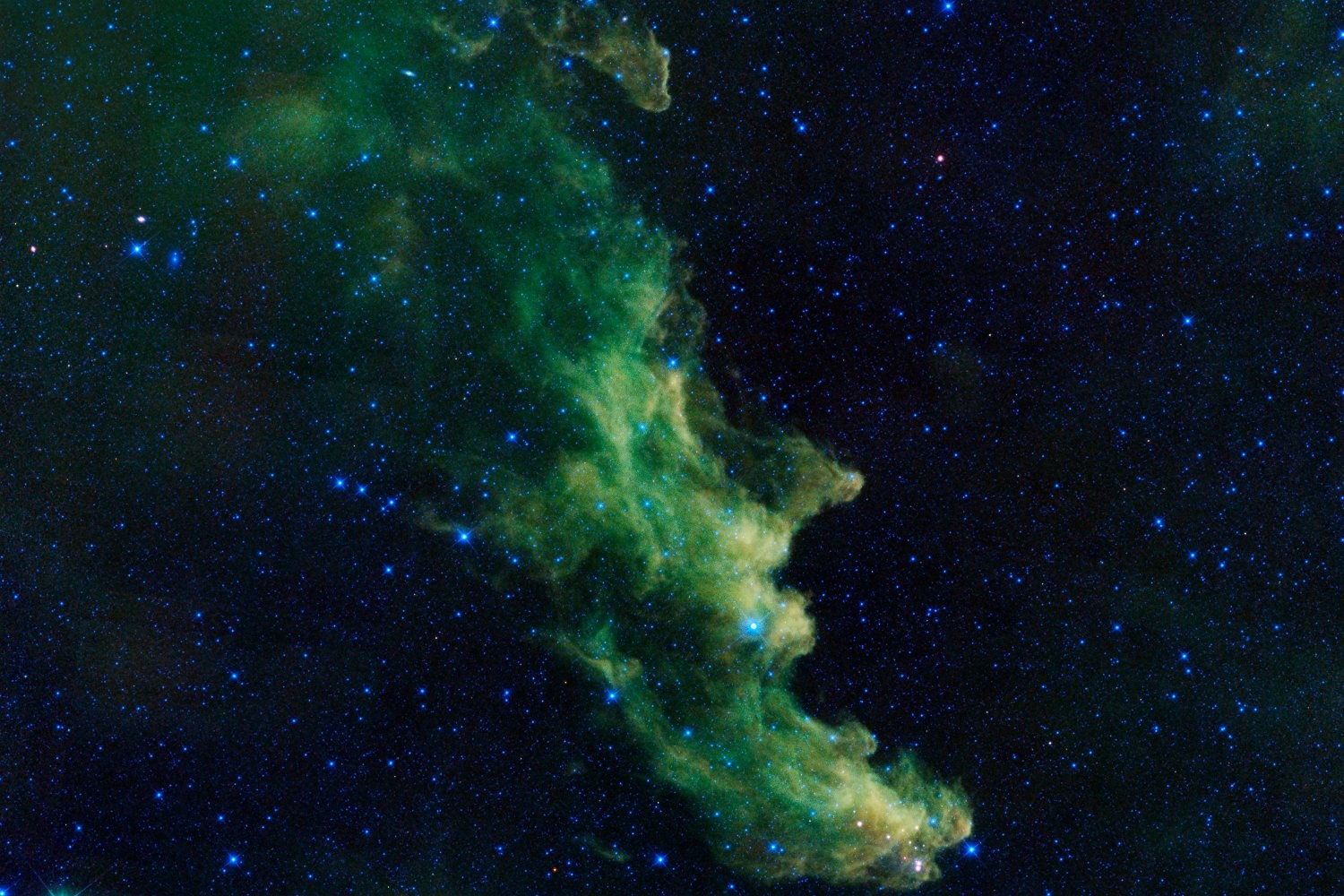
For eleven years Mira Calloway has kept the observatory at Brightwater, on the dark side of Tessaly's icy moon Veyra: three infrared telescopes on the ice, a viewing dome, a lodge of twelve rooms and the most talked-about nights in the outer Reach. We met in the lodge library, beneath a screen showing the Lantern in false colour, while the real one hung faint and grey beyond the window.
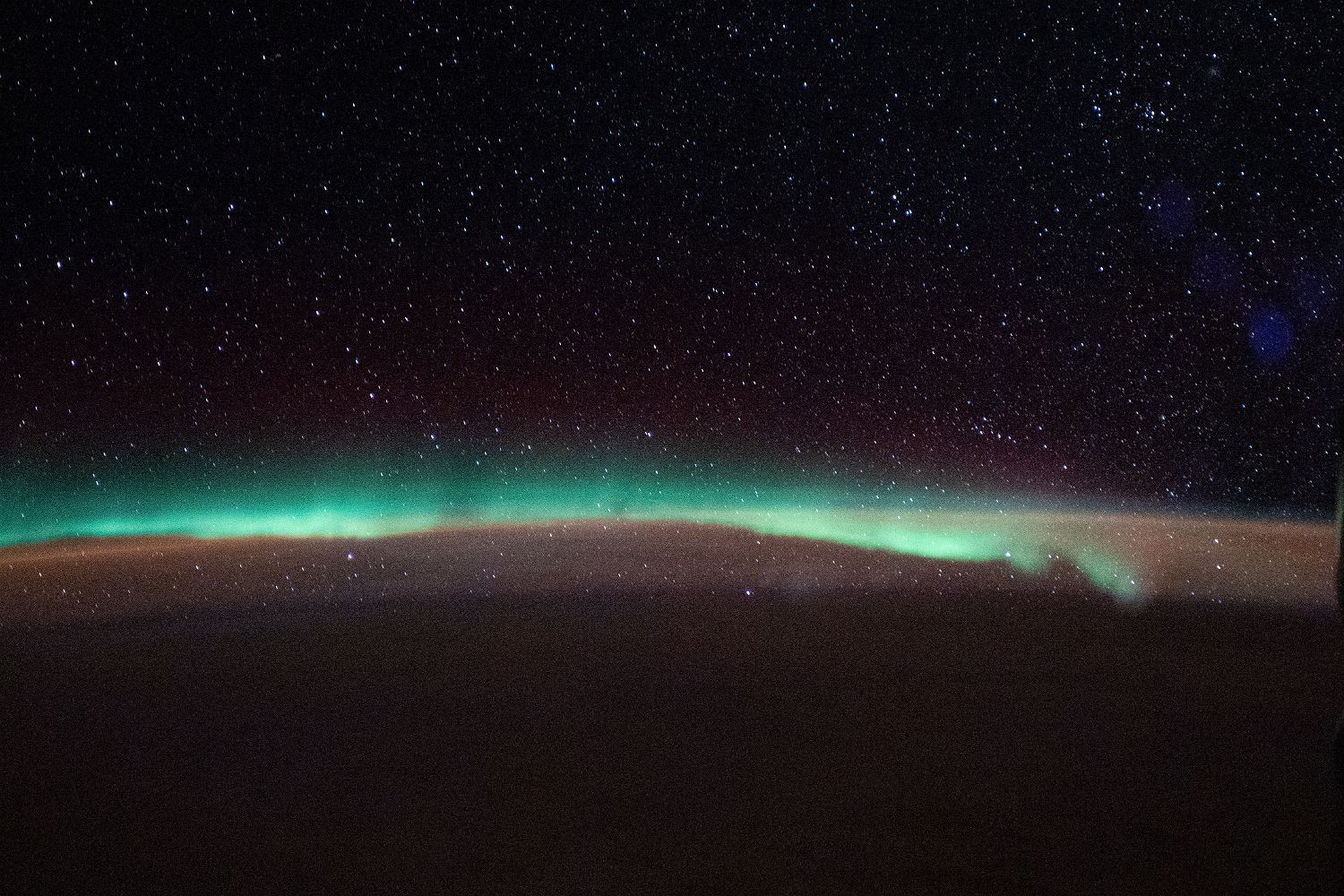
Calloway grew up on Calder's northern coast, where the aurora season is the event of the year, and trained as an instrument engineer before answering a notice for "a keeper, cold-tolerant, two years". She stayed for eleven. Our conversation has been edited for length.
The work
What does a keeper actually do?
Everything the astronomers would rather not think about. Brightwater is a working observatory first and a lodge second. The three big telescopes are infrared instruments, and an infrared telescope has to be cold, because anything warm glows in infrared, the telescope included. Veyra's dark side is one of the coldest places anyone works in the Reach, which is exactly why we are here. My job is to keep the instruments cold, clean and pointing where they should, and to keep the people who use them warm, fed and on speaking terms.
What does an ordinary shift look like?
The telescopes work through the dark, so the important hours are the ones the guests sleep through. I walk the field at the start of every shift, in a suit, checking the covers. Frost from the geysers at the south pole drifts round the moon and settles on everything as a fine white dust, so the covers are swept twice a shift. Then the cooling lines, the pumps, the supply manifest and the menu, which matters more than people think. Nine people in a small building a long way from anywhere will forgive almost anything except a bad week of dinners.
Who are the nine?
Two astronomers on rotation, two technicians, a cook, a doctor who is also our pilot, a walking guide, a housekeeper and me. A supply ship comes every few weeks. You learn to like the people you have.
Lantern nights
Brightwater is famous for its Lantern nights. What happens on one?
The telescopes are for work, so every second night we give the guests the dome. At eight by the lodge clock the lights go down to red, and from then until the small hours guests take turns at the dome telescope, the one instrument here built for human eyes. In the library we put up the infrared pictures the big telescopes took the night before, so you can stand between the two: the false colour on the screen, and the faint thing itself through the glass.
What do people actually see?
Less than they expect at first, and more than they expected by the end. To the naked eye the Lantern is a long pale smudge. Give your eyes half an hour in the dark and it grows edges. Through the dome telescope the Twin Fires resolve into two knots of stars, and once your eyes have settled you can follow the Wing away from them like smoke from a chimney. I always explain the pictures before anyone looks. Green is warm dust, red is the hottest glowing gas, blue is starlight. Our pictures are true, but they are not what your eye will ever see. The eye sees grey and a little silver, and that is enough.
Do guests feel cheated?
Almost never. Someone usually goes quiet at the eyepiece and stays far longer than their turn. In my first year I moved them on. Now I let them stay, and the queue nearly always agrees with me.
Our pictures are true, but they are not what your eye will ever see.
Do you have a favourite part of the Lantern?
The Nursery, where stars are still forming. In infrared it is full of bright knots, each one a young star still wrapped in the dust it is being made from. One of them was barely there when I arrived, and it is brighter every season. I have watched a star grow up, more or less, which is not something many people can say about their job.

Guests and the cold
Who comes all this way?
Fewer people than you might think, and more kinds. Retired liner crews who spent their working lives too busy to look out of the window. Couples. Students who saved for years. Once a family with three children under ten, who were among the best guests we have had: children adapt to the dark faster than adults and complain about the cold less.
How cold is it?
Outside, around two hundred degrees below freezing. Nobody meets that directly. You meet it through a suit, and the suits are very good. What guests feel is the dome, which we keep at ten below. Warm air rising past cold glass makes the stars swim, so a warm dome is a blurred dome. We hand out lodge parkas at the door, and mittens with a flap for one finger, for the focus knob.
And what does the cold do to you, after eleven years?
The cold is not the hard part. The hard part is the dark. Your body still wants a sun. We have a lamp room with a bright white panel, and everyone, me included, sits under it for twenty minutes at breakfast. There is also the hot room, a small sauna beside the laundry, where most of the lodge's arguments are settled. Nobody stays cross at that temperature for long.
What eleven years teach
What have you learned about the people who come?
That nearly everyone whispers in the dome, although there is nothing out there to disturb. That the guests who ask the most questions on the first night ask none on the third. And that people come for the pictures and go home talking about the dark. On Calder there is always a town on the horizon, or Selka, or the aurora. Here there is nothing between you and the Lantern but glass.
Will you stay?
I tell myself every renewal is the last. Then a supply ship comes in, somebody new climbs into the dome on their first Lantern night and goes completely silent, and I sign again.
Brightwater in brief
- Where: Veyra's dark side. Tessaly is 9 days from Halcyon on the standard transfer; the shuttle from orbit lands beside the lodge.
- The lodge: twelve rooms, a library, a lamp room and a hot room, with a staff of nine.
- Lantern nights: every second night, from eight by the lodge clock. A stay of six nights gives you three.
- The dome: kept at ten degrees below freezing; parkas and mittens are lent at the door.