Every child on Calder learns that stars twinkle. Most travellers find out, on their first night aboard a liner or on Halcyon Station, that they do not. The stars outside the window are steady, hard little points, so still that some people find them unsettling, as if someone had painted them on. Nothing is wrong with the stars. What has gone is the air.
Twinkling is the air's doing
Calder's atmosphere is not one clear layer but a restless stack of them, warmer and cooler pockets of air sliding past one another, each bending light very slightly differently. A star is so far away that its light reaches you as a single, impossibly thin thread. Every pocket of air that drifts across that thread pushes it about, a little brighter, a little dimmer, a little to one side, many times a second. That flicker is twinkling.
Near the horizon, where starlight crosses far more air, the effect is strongest, and a bright star low in the sky can flash red, white and blue as the air splits its light and puts it back together. On a windy night the stars twinkle more, on a still one less. Planets, by contrast, barely twinkle at all. A planet is close enough to show a tiny disc, so its light arrives as a bundle of threads, and the jostling averages out across them. Hence the old navigators' rule on Calder: if it twinkles, it is a star.
Steady points, true colours
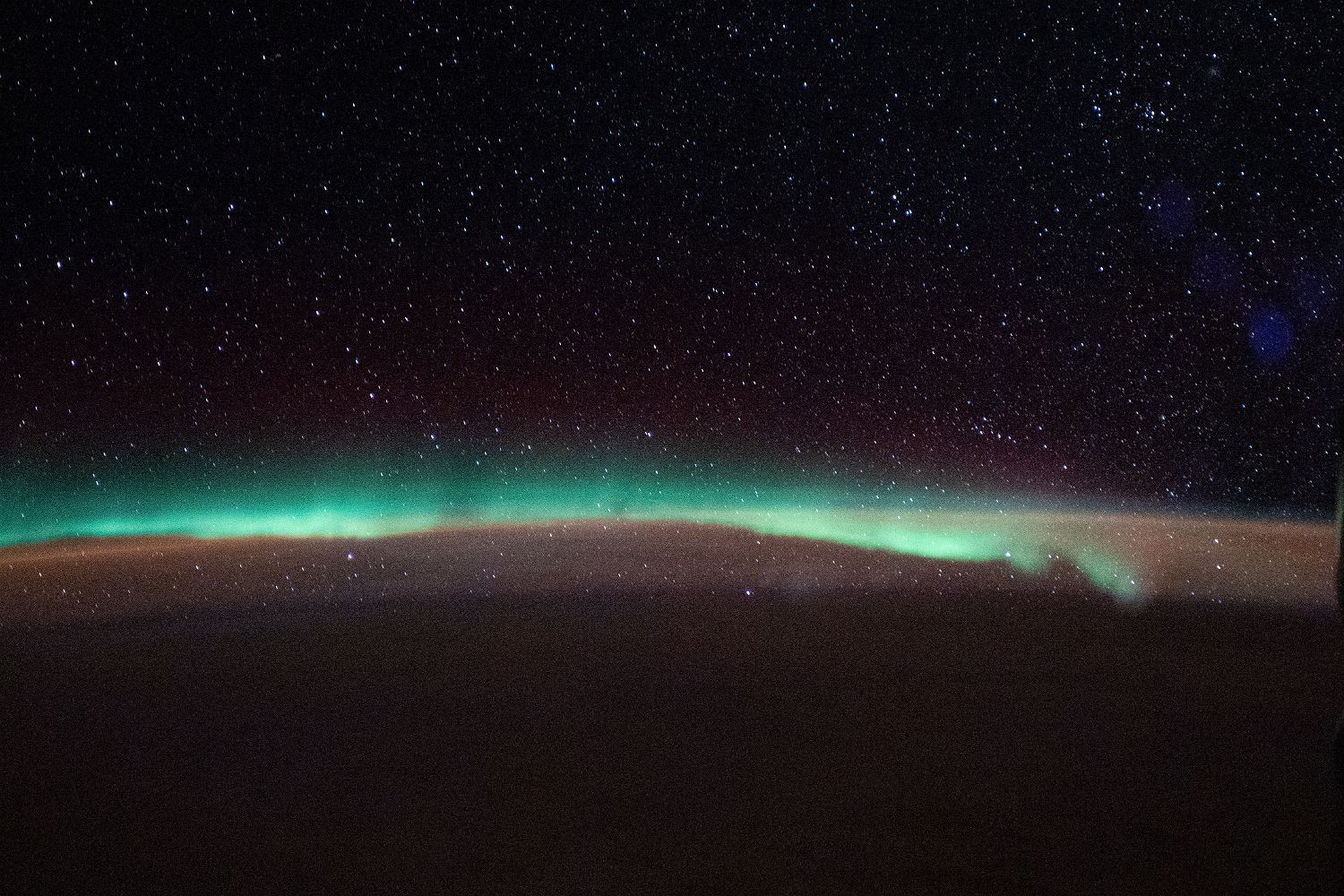
Above the atmosphere there is nothing to jostle the thread, and a star simply shines. Two things follow, and both surprise people. The first is that there are far more stars than you expected, because the faint ones are no longer smeared out by the air or lost in its glow. The second is colour. Through Calder's air most stars look white. Above it the brighter ones show their colours plainly: some are orange, a few a deep amber-red, the hottest a cold blue-white. Ilyr itself, which sinks gold and orange into the sea at sunset, is a fierce yellow-white seen from orbit.
There is one exception, and it is worth knowing. A liner's cabin is warm and its window is cold, and the thin layer of air moving against the inside of the glass can make the stars shimmer slightly, as if a little of Calder's weather had come along for the ride. The only place a star twinkles in space is inside your own window. That is also why Brightwater, the observatory on Veyra, keeps its viewing dome at ten degrees below freezing: a warm dome is a blurred one.
Try it in your cabin. Turn the heating down and the lights off for half an hour before you look, and keep your breath off the glass. If the pane feels much colder than the room, expect a little shimmer; give it time and it settles.
The only place a star twinkles in space is inside your own window.
What it means on Selka and Veyra
On an airless world the stars behave as they do from orbit, all the way down to the horizon. On Selka they set as steady points, snuffed out by the edge of a grey hill rather than reddening and flickering into it as they would on Calder. The sky is black by day, but the sunlit ground is so bright that your pupils close down and only the brightest stars show. Stand in a deep shadow (the shadow of the Sixth Station boulder is the classic one), shade your visor from the glare and wait. After a few minutes, stars come out at midday.
Veyra's dark side is better still, since there is no sunlit ground to fight. Two practical points apply on both moons. First, switch to your suit's clear night visor: the tinted day visor that protects your eyes in sunlight cuts out the faint stars too. Second, binoculars and helmets do not mix, so for anything faint do your looking from inside a dome. Outside, enjoy the stars as they are: steady, sharp and in colour. Orrin, with its thin, cold air, sits in between. Its stars twinkle, but lazily.
Why the pictures leave out the stars
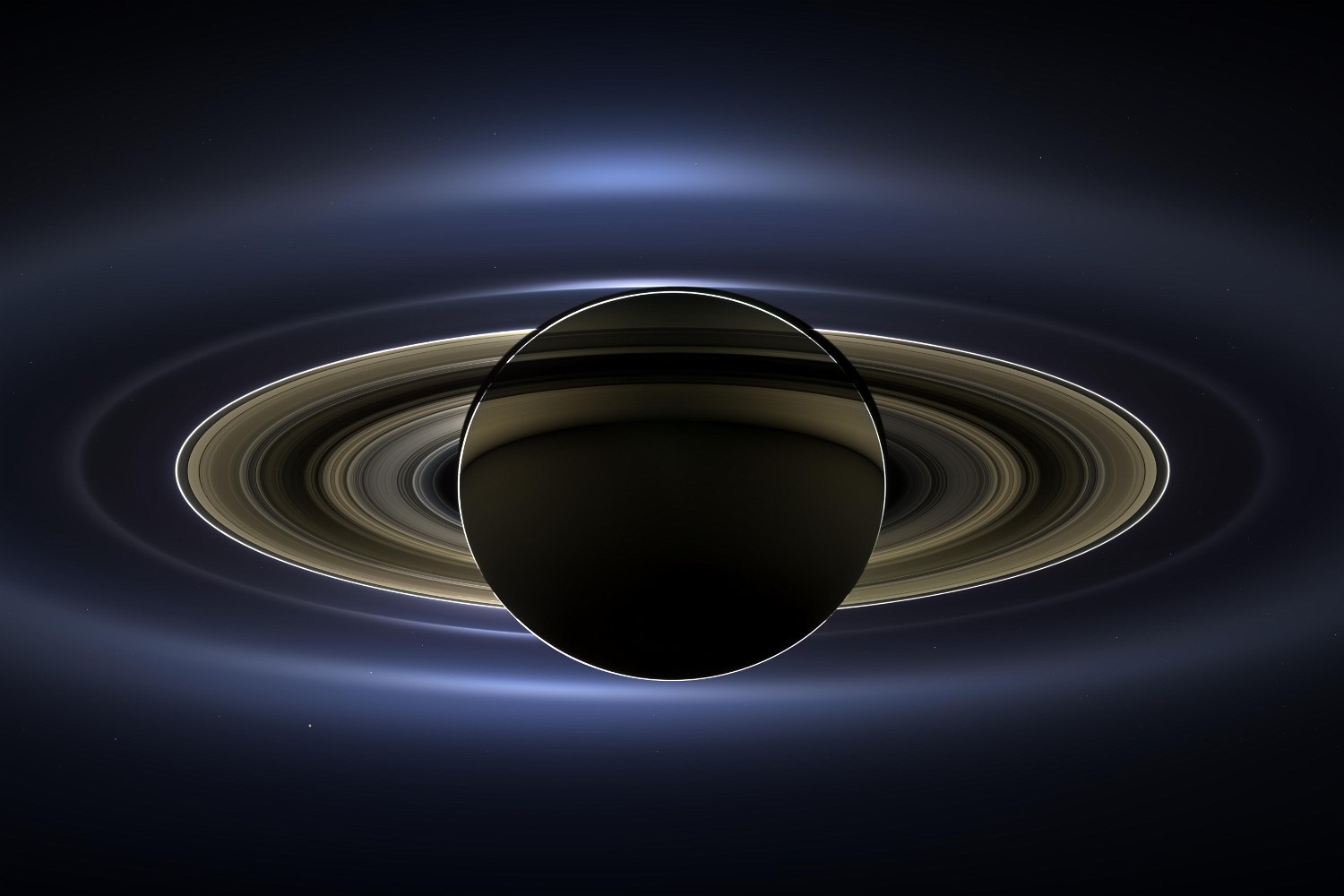
People often ask why photographs of Tessaly, or of Calder from Halcyon, show a sky with no stars in it. Nobody has removed them. A sunlit world is enormously brighter than any star behind it, and a camera set to show a planet's clouds properly gives the stars far too little light to register. Set the camera for the stars and the planet becomes a white blank. Your eyes do much the same: on the sunlit side of the station, looking at Calder, you will see no stars at all.
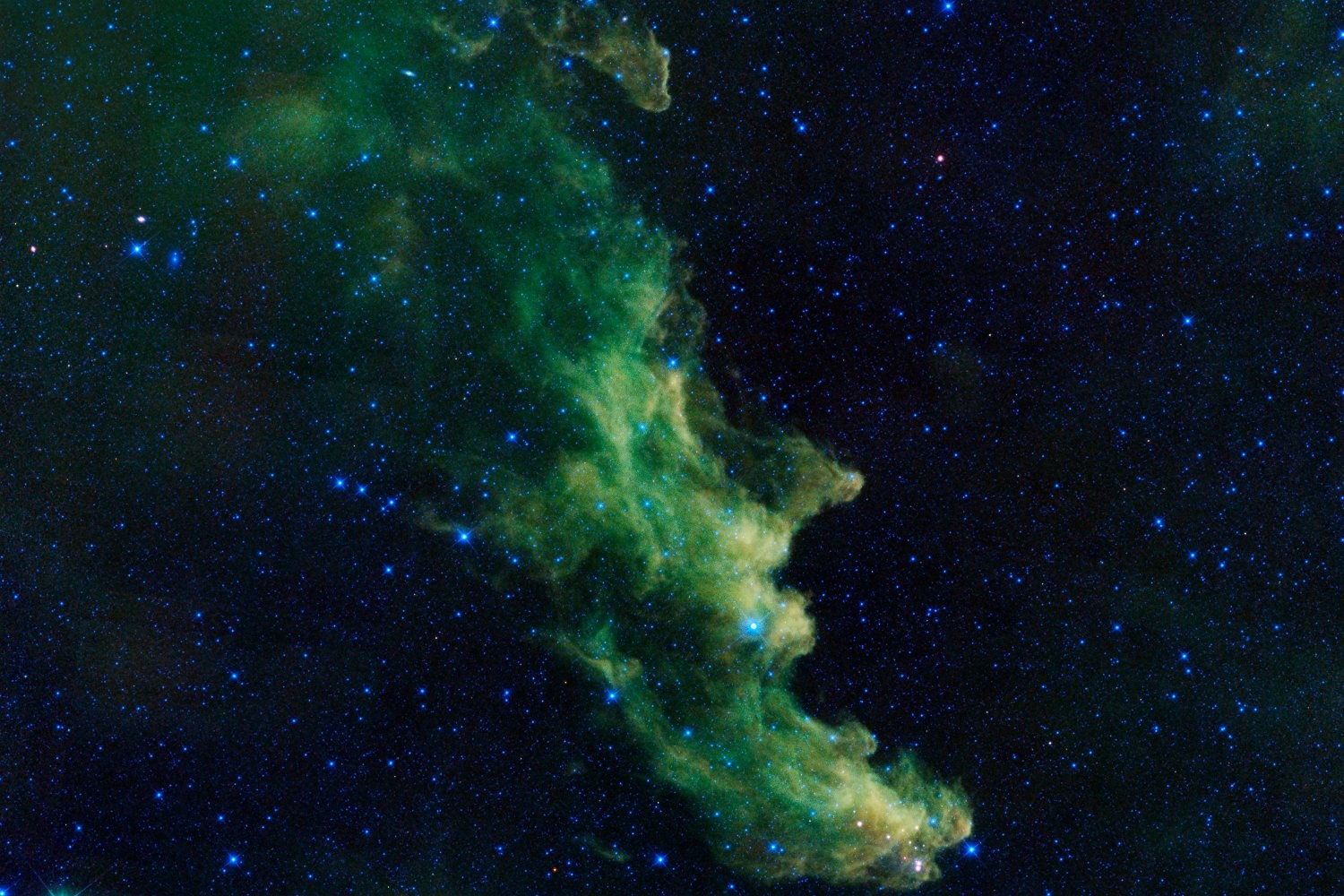
So when you see a picture of a bright planet hanging in a sky full of stars, it is almost always two exposures combined, or a painting, and the better photographers say so in the caption. The pictures of the Lantern from Brightwater, like the Witch, are crowded with stars for the opposite reason: nothing bright is in the frame, and the telescope can gather the faint light for as long as it likes.