The Gediz canyon is so deep that on a still morning its far wall fades into a haze the colour of weak tea, and so long that you can walk its rim for four days and see only part of it. The trail from Corran is the classic walk on Orrin: 38 km, three nights in pressurised huts, one pass of wind-carved sand and one mountain view you will not forget. I have walked it twice. Here is how to do it well.
Before you go
Corran, the domed town on the canyon rim, is where every walker starts. Spend at least one full day there before setting out. You will need it for the suit fitting and the trail briefing, and your body will be glad of the time to settle after the crossing. Orrin's air is far too thin and cold to breathe, so outside the dome you wear a pressure suit at all times, and it is the suit, not the distance, that makes this walk hard work. It resists every bend of the knee and every closing of the hand. The gravity is lighter than Calder's, which helps, but the bulk more than makes up for it.
As for fitness: if you can walk 15 km with a day pack on two days running at home, you can do this. Practise in heavy gloves if you can, and work on your grip. Suits are hired in Corran with their air and water systems; you bring everything that goes inside them.
The trail has one rule, and the wardens enforce it: never leave a hut without a full air supply, and turn back if you reach a day's halfway marker with less than half. Each warden radios ahead when you set off, and the next hut knows when to expect you.
Day one: Corran to the Ochre hut, 9 km
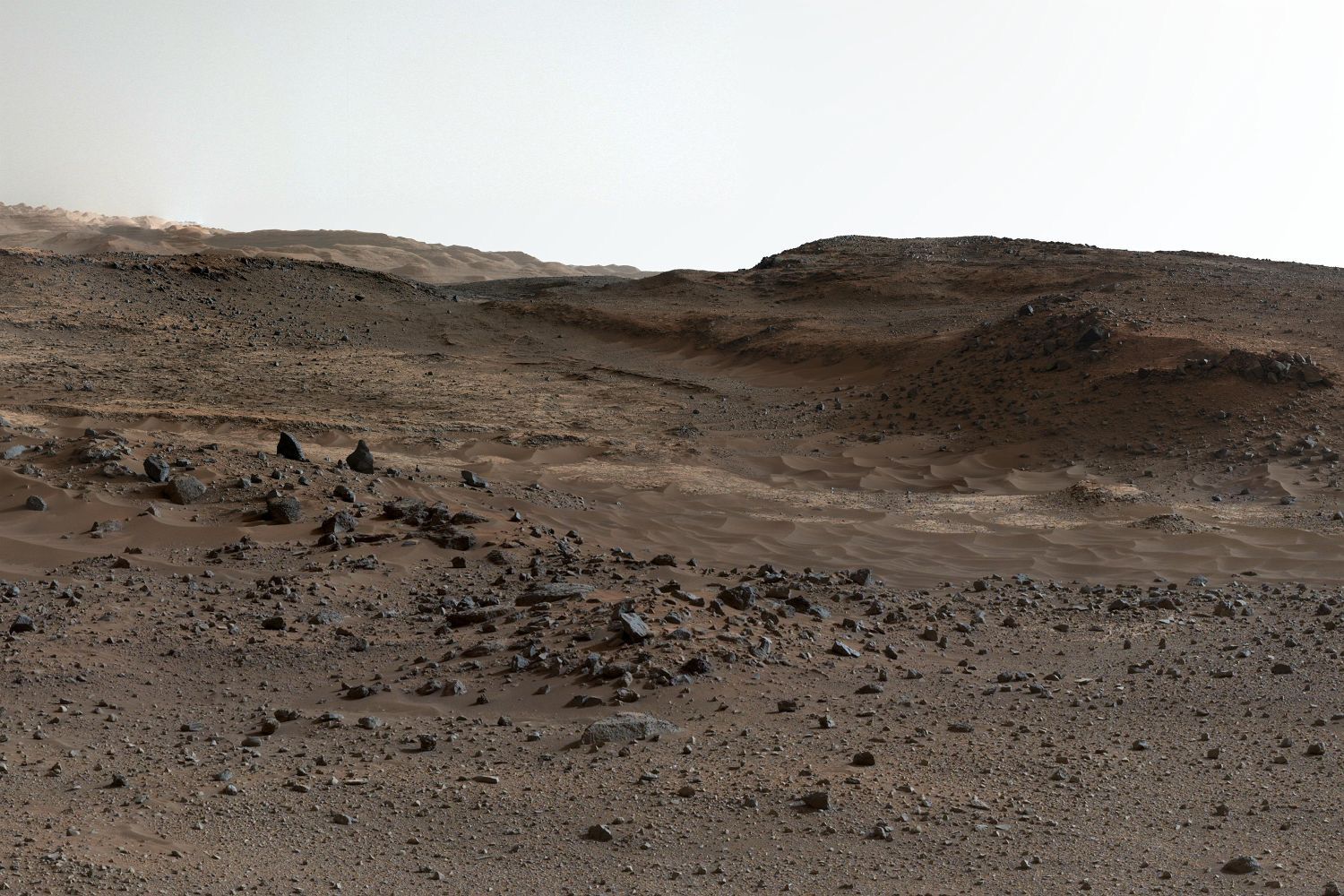
You leave through Corran's main airlock after breakfast, and within ten minutes the dome is behind a fold of red-brown ground and you are alone with the rim. The first day is gentle on purpose. The path keeps a safe distance from the edge and crosses a wide valley scattered with dark rocks and low layered hills, the landscape most people picture when they think of Orrin. Every so often it swings out to a viewpoint, and the canyon opens below you: wall after wall of banded rock, falling away into shadow.
The Ochre hut, like all three on the trail, is a low pressurised shelter with an airlock, a rack for suits, sixteen bunks, a galley stocked with food and a warden who will check your seals before you sleep. Brush every grain of dust off your suit in the airlock before you go inside. Orrin's dust is fine as flour and gets into everything; the wardens are strict about it, and they are right.
Day two: through Bolívar Pass, 11 km
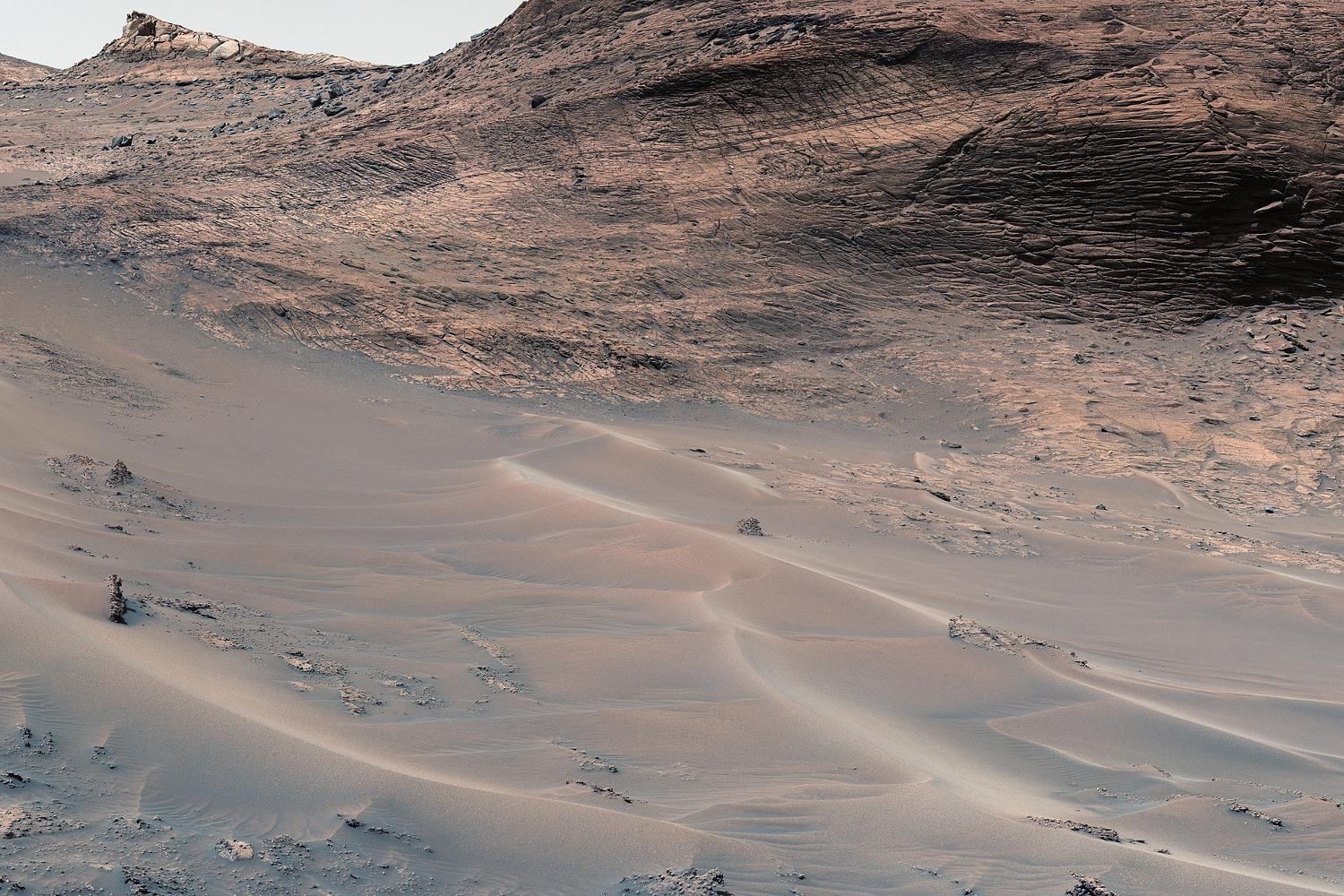
The longest day, and the most varied. After a few hours on the rim the trail drops to Bolívar Pass, where the wind has carved the sand into long, sharp-crested ridges that run in parallel below dark layered cliffs. Walking between them feels like moving through the ribs of something enormous. The sand is loose on the ridges' flanks, so stay on the marked line in the troughs and use your poles. In the afternoon wind the crests smoke with fine dust, which is beautiful and also a reason not to linger.
The Pass hut sits at the far end, where the trail climbs back towards the rim. Drink properly that evening. Inside a suit you sweat more than you notice, and the air in the huts is dry. The suit's drinking tube holds about three litres; empty it every day, and refill it every night.
Day three: the Halvard view, 10 km
Most walkers remember this day for a single moment. An hour beyond the Pass hut, the trail turns a shoulder of rock and Mount Halvard appears across the canyon: a layered mountain 5 km high, rising in reddish bands from the haze under a pale blue-grey sky. It does not look real at first. Your eye has nothing to measure it against, and only when you pick out a single band and follow it do you begin to see the size of the thing.
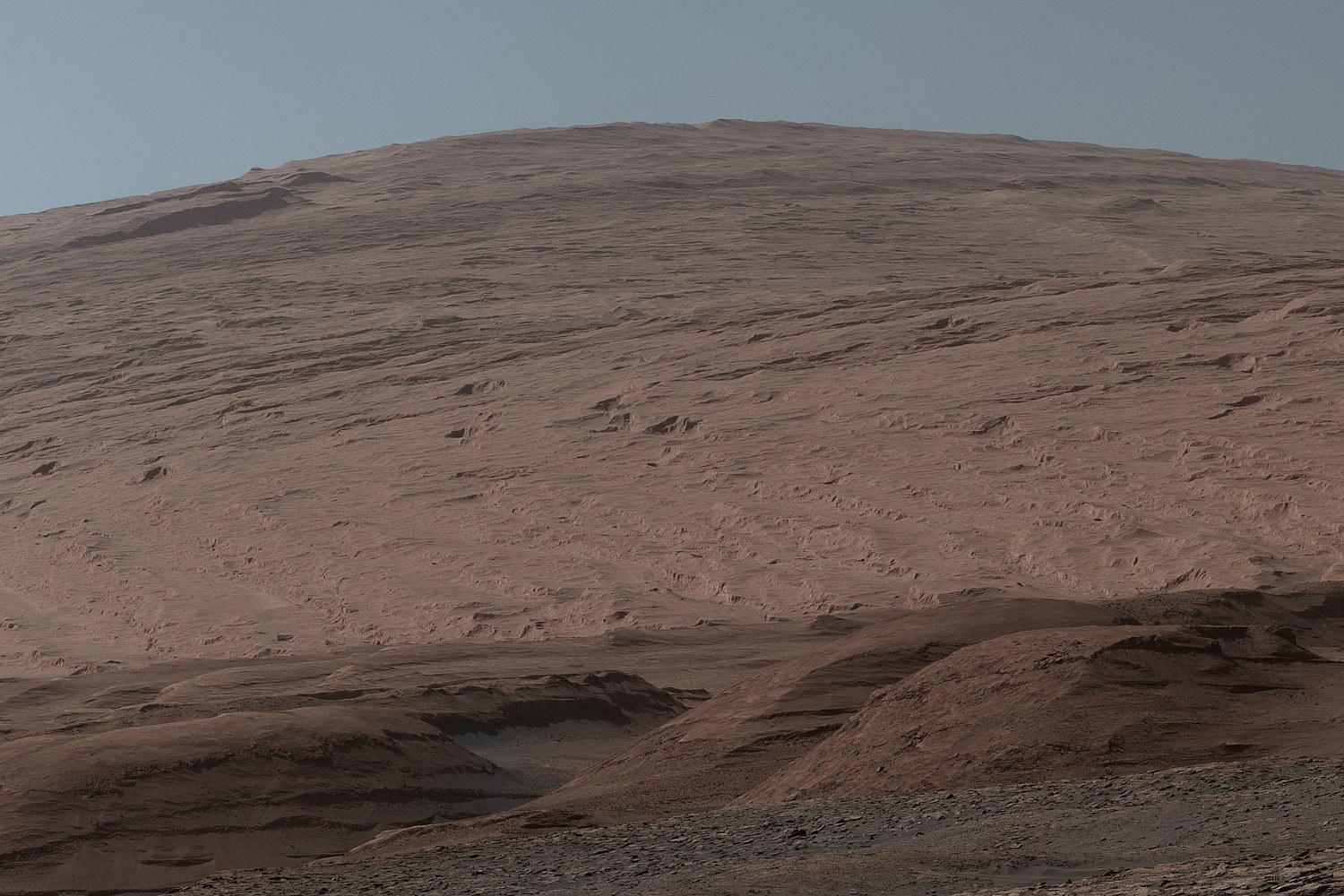
The path follows the rim for the rest of the day with the mountain in view almost all the way, and nobody hurries. The Halvard hut has a wide window facing the canyon. If the dust is right, stay up for the sunset, when the sky around the small, pale sun turns blue as the light fades.
Day four: to the rover halt, 8 km
The last morning is mostly downhill, away from the rim and across open ground to the rover halt at the trail's end, where a pressurised rover takes walkers back to Corran in about two hours. Most people are quiet on that ride. Your legs will ache, your hands most of all, and you will want a long wash in the dome. Book the bath before you leave town.
What to pack
- Two sets of thin base layers: one to walk in, one for the huts
- Liner gloves and a spare pair; they take the wear, not your skin
- Soft, well-worn walking socks, three pairs
- Blister plasters, tape and something for sore hands
- Hut slippers and a light sleeping-bag liner
- Snacks that can be eaten through the suit's feeding port
- A small brush for dust, and patience for using it
- The pack rides over the suit, so keep it light: 8 kg is plenty