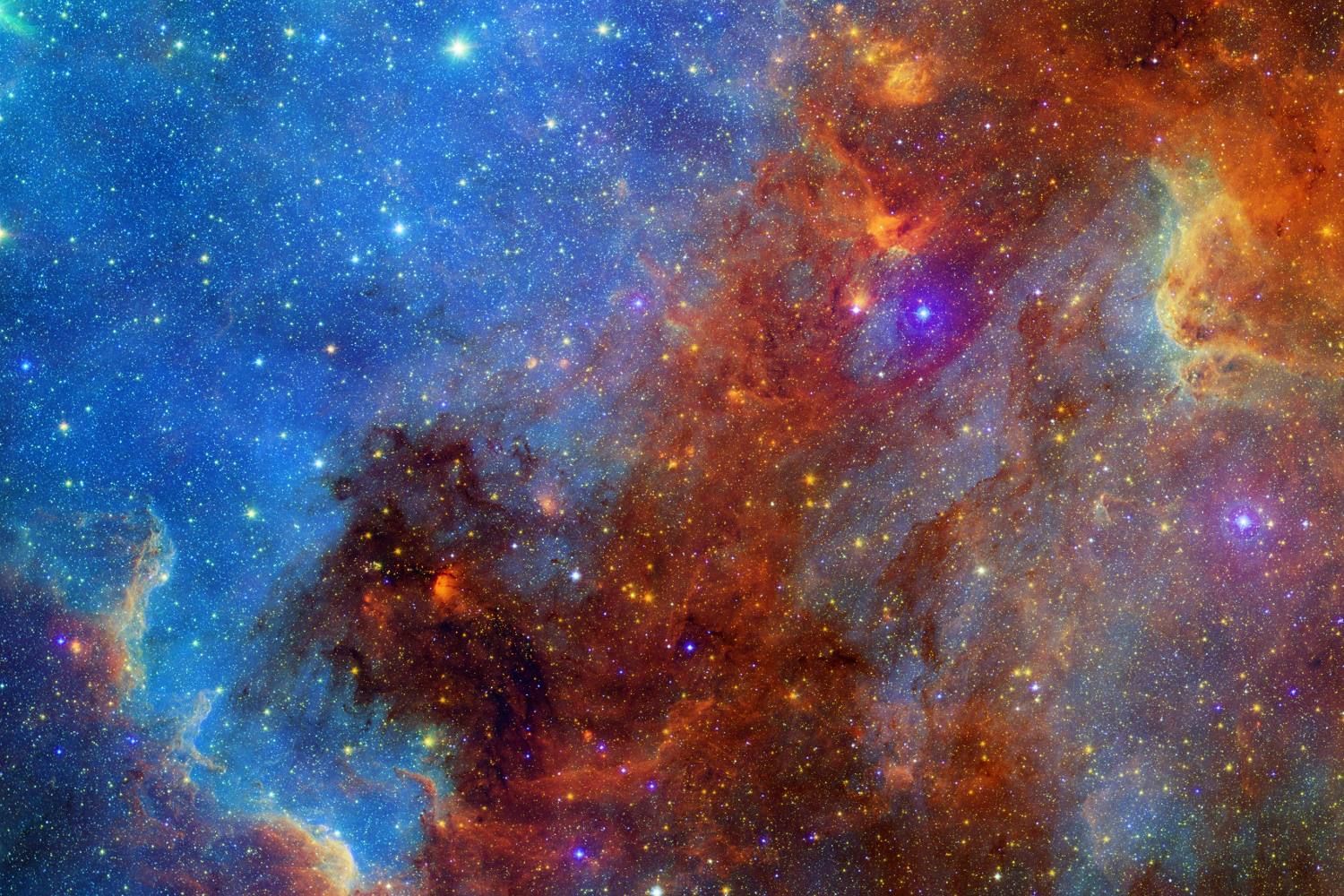
The first time you see the Lantern from Veyra you may wonder, for a minute or two, what the fuss is about. It is fainter than the pictures and greyer than the posters, a pale cloud across the dark. Then your eyes catch up. This is a map for that first night: where to begin, what to look for, and how to get your eyes to do more than you thought they could.
First, give your eyes the dark
Your pupils open within a minute of the lights going out, but that is the least of it. The real change happens in the eye's chemistry, and it takes about half an hour. A single glance at a white screen undoes most of it, which is why the lodge at Brightwater goes over to red light at eight by the lodge clock on Lantern nights, and why the staff will ask, politely and then less politely, for screens to stay in pockets.
The dome is kept at ten degrees below freezing, because warm air rising past cold glass makes the stars swim. Dress for it. The lodge lends parkas and mittens with a flap for one finger, but your own warm socks and a hat make the difference between an hour at the eyepiece and twenty minutes.
Look away to see more. The centre of your eye is built for detail in good light; its edges are better in the dark. To see a faint cloud, look a little to one side of it. It feels like cheating. It works.
A map in five steps
The Lantern is large, so learn it the way you would learn a city: one landmark first, then the streets that lead from it. Start bright and work towards faint.
- The Twin Fires. Begin with the brightest part of the Lantern, two hazy points side by side, close enough that one thumb held at arm's length covers both. Each is a cluster of young, hot stars. Everything else on this map is found from here.
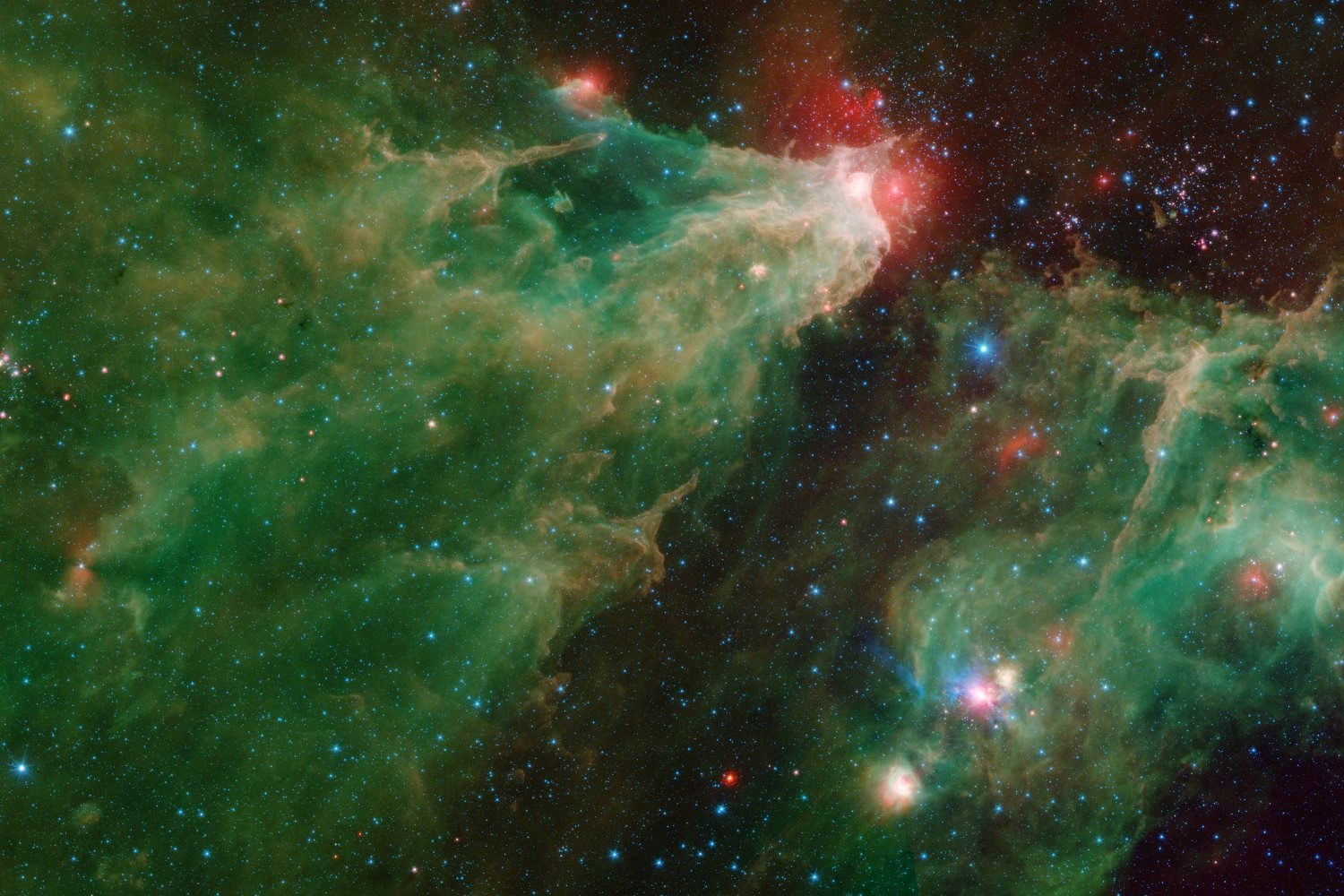
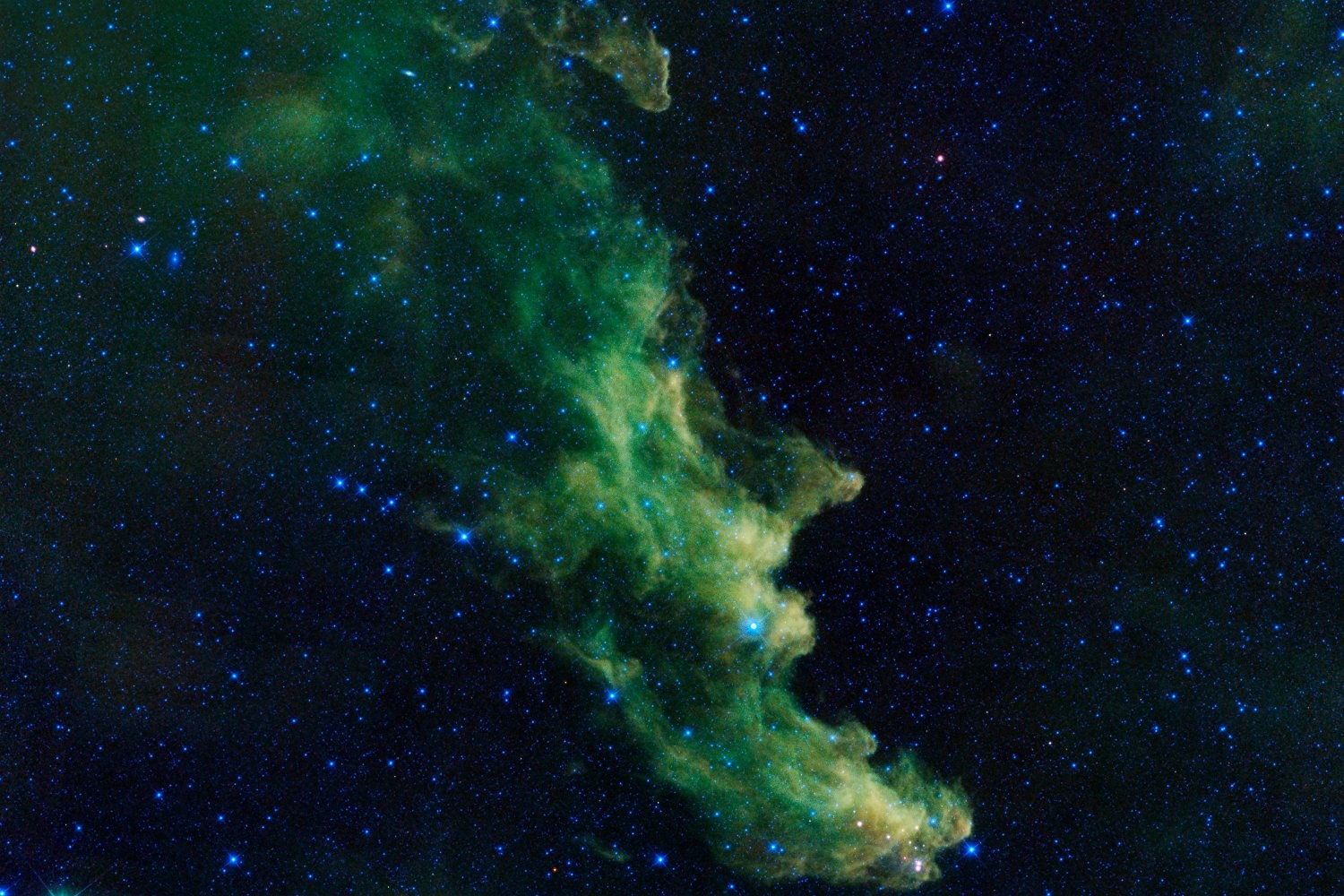
- The Wing. From the Twin Fires a long, faint streamer runs away across the sky, like a feather laid on black cloth. In Brightwater's infrared pictures it is a long green cloud of warm dust with a bright red head: gas, nearest the clusters, heated by them until it glows.
- The Reef. On the other side of the Fires lies a mottled patch, lumpy rather than smooth. In false colour it is the busiest part of the Lantern: blue where starlight shines through, red where gas glows, and orange where glowing gas and warm dust overlap.
- The Nursery. Below the Reef, look for a few soft knots that refuse to sharpen however carefully you focus. They are young stars still forming, wrapped in the dust they are made from, and they are the dome telescope's best target.
- The Witch, the Butterfly and the Veil. These take patience. The Witch is a hooked profile of warm dust at the Lantern's edge, far easier to see once someone has traced it for you. The Butterfly is two small lobes of glowing gas, a telescope object. The Veil is the faint sheet that frames all of it, and it is usually the last thing a new eye finds, often well into the first hour.

Binoculars or telescope?
Brightwater keeps both, and the order in which you use them matters: eyes first, then binoculars, then the telescope.
Binoculars
The beginner's best friend. A pair of seven- or ten-power binoculars shows the Lantern's shapes whole: the Wing from end to end, the lumps of the Reef, the Witch's nose. Brace them on the dome rail and the view steadies.
- A wide view, so you keep your bearings
- Easy to pass along a row
- Lent by the lodge; bring your own if you have them
The dome telescope
It shows what binoculars cannot: the Twin Fires breaking into separate stars, the knots of the Nursery, the two wings of the Butterfly. The view is narrow, so the shapes are lost, and the queue means a few minutes at a time.
- A narrow view: know where you are first
- Best for the Nursery and the Butterfly
- The staff point it; you focus
The Lantern rewards patience more than equipment.
On the last night of most stays the guides lead a short suit walk out to the telescope field, and the Lantern overhead through a visor, with no dome between you and it, is a different thing. Leave the binoculars behind, because they do not work against a helmet. Switch to the clear night visor before you go out, and give your eyes a few minutes to settle again once you are outside.
Lantern nights at Brightwater
Brightwater is a working observatory, and on most nights its three infrared telescopes have the dark to themselves. Every second night the dome belongs to the guests. A staff astronomer gives a short tour of the sky with a dim red pointer, the dome telescope is set on each region in turn, and in the library the infrared pictures from the night before are on the screens, so you can set the false colour beside the faint grey original. Remember the key: green for warm dust, red for the hottest glowing gas, blue for starlight.
Plan for three Lantern nights, which means a stay of six. On the first your eyes are learning. By the third you will find the Wing without help, and you will understand why the people around you have stopped talking. The Lantern rewards patience more than equipment.
Before your first Lantern night
- Allow half an hour of darkness before you judge what you can see.
- Red light only; screens stay in your room.
- Dress for ten degrees below freezing: a hat, warm socks, layers.
- Start with the Twin Fires, then the Wing, then the Reef.
- Use binoculars before the telescope.