The first plume I saw on Veyra rose without a sound. It came from a seam in the ice some way ahead of us, a pale column that thickened, leaned and kept on rising long after my eyes said it should have fallen back. On a moon with almost no gravity, ice does not so much fall as drift, and the jets from Veyra's south pole climb hundreds of kilometres before they thin into the black. We had been walking for an hour. Our guide stopped, turned and simply pointed.
The Tiger Lines
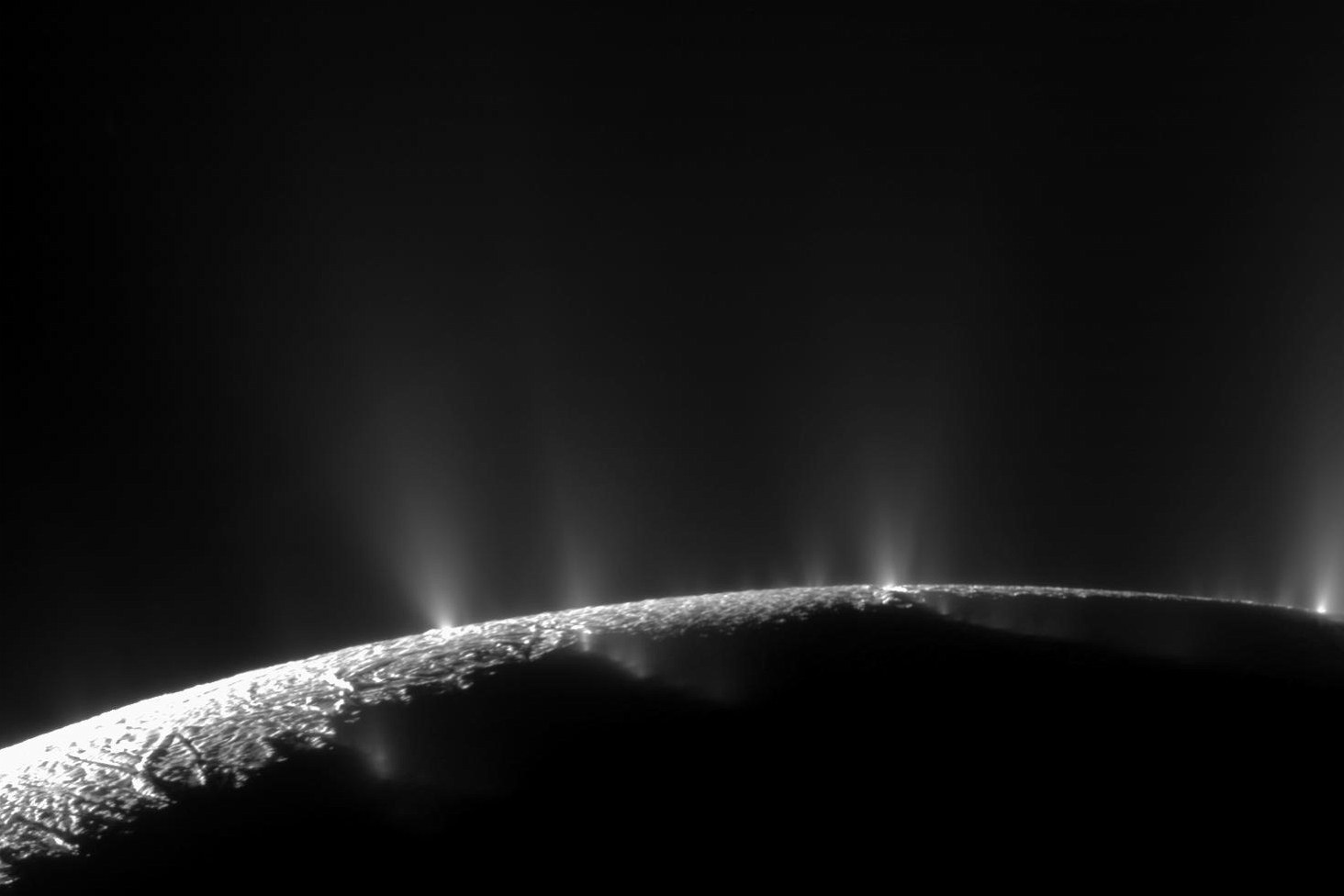
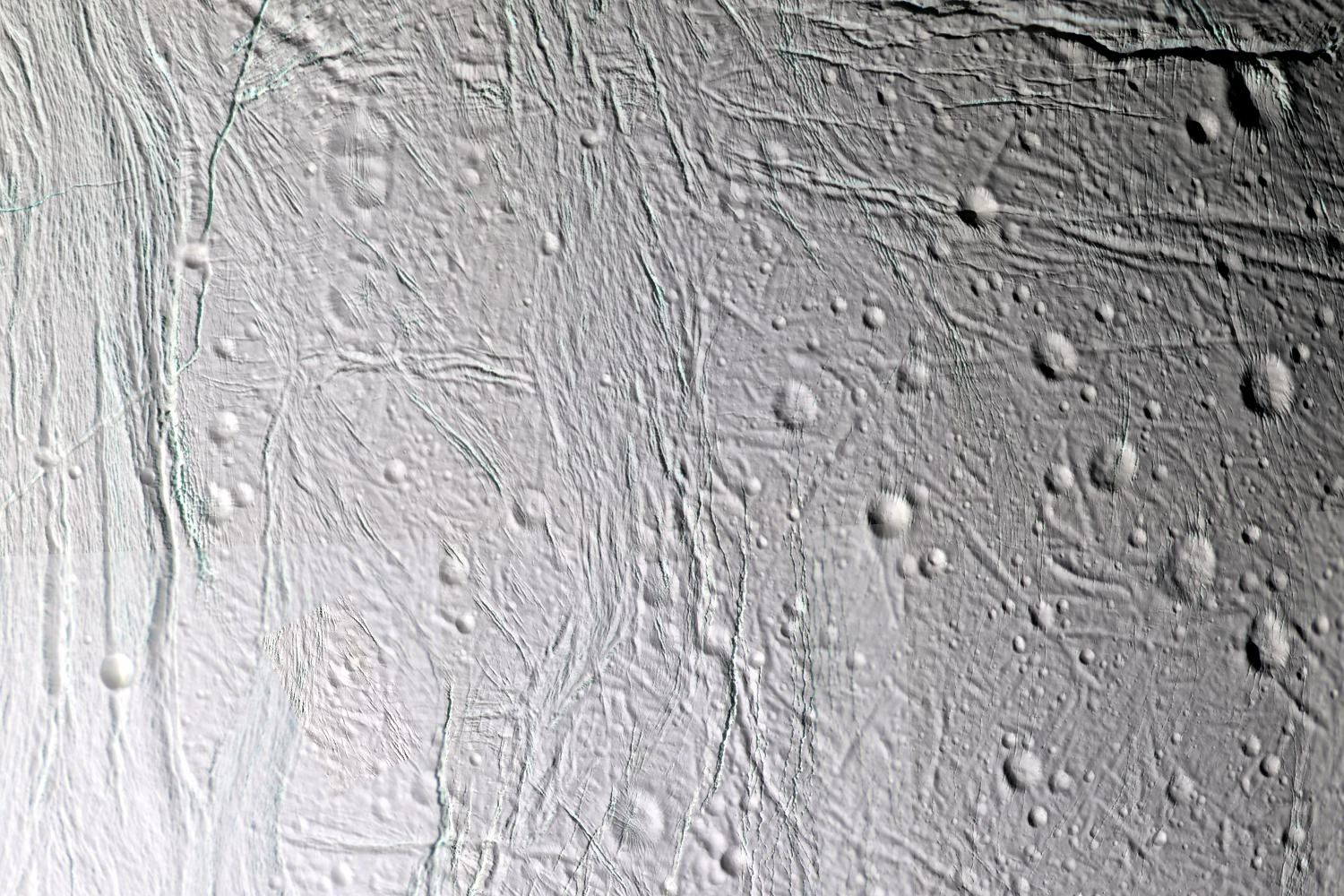
Veyra is a small, bright moon of Tessaly, wrapped in clean ice that throws back nearly all the light that falls on it. At its south pole a set of long, parallel fractures cuts across the surface: the Tiger Lines, each well over a hundred kilometres long. They are less cold than the ice around them, because beneath Veyra's shell lies liquid water, kept from freezing by the constant flexing of the moon as it circles the giant. Water vapour and grains of ice escape through the fractures and spray out into space, and some of it falls back as snow so fine that it settles like flour.
From the ground the Lines are less dramatic than their name. They show as low ridges, a few dark seams and a softening of the ice on either side where the fallen snow lies deepest. It is only when a plume rises that you understand you are standing on a lid.
Walking the field
Walks start from the polar shelter, a pressurised hut and landing pad at the edge of the geyser field. They are guided, always, in groups of up to eight, and they never go close to the fractures themselves: the ground near the Lines is soft and the edges unstable, and the guides keep their parties well back, on ice they have walked for years. You do not need to be close. The plumes are so tall that they fill the sky from a distance.
Moving is the first lesson. Veyra's gravity is so slight that a careless step can launch you several metres and leave you drifting down for what feels like an age, so each walker is clipped to a line, and boots have weighted soles and short spikes. The rhythm is a slow, deliberate shuffle. It is tiring in a way that walking at home never is, and most people are glad of the break in the shelter at the halfway point.
The cold is the second lesson. The surface is around minus 200 degrees, and although the suits are heated, the cold finds the places where they touch you: the fingertips, the toes, the back of the neck against the helmet ring. Wear the liner gloves you are given and tell the guide early if your hands start to go numb. They have seen every kind of brave silence, and they would rather you spoke.
The rhythm of the plumes
The geysers are not steady. Veyra's orbit around Tessaly is slightly oval, and the tides that squeeze the moon change as it goes round. At the far point of each orbit the fractures are pulled open a little wider and the plumes swell; near the close point they narrow and the jets dim. The whole cycle repeats every orbit, about a day and a half, and the guides time the walks so that you are out on the field as the plumes build.
Within that rhythm, single jets come and go on their own. One may fall silent for hours and then return, stronger, in a slightly different place. Part of the pleasure of a second walk is learning to read the field as the guides do, noticing which vents are awake.
It is only when a plume rises that you understand you are standing on a lid.
Seeing them backlit
Here is the secret of every great picture of Veyra's plumes, including the one above: the light comes from behind them. Grains of ice scatter light forward, as dust does in a sunbeam, so the plumes look faint with Ilyr at your back and brilliant with Ilyr behind them. On the ground, the best moment comes when Ilyr has just dropped below the horizon. The sky goes black, the surface goes dark, and the jets light up in tall, glowing columns against the night. Guides will position the group for it, and they will ask for complete silence on the radio while it lasts.
The approach by shuttle is often timed for the same effect, with the plumes seen edge-on against black space as the craft comes in. Ask for a window seat on the side away from Ilyr.
Staying at Brightwater
Most walkers stay at Brightwater, the observatory and small lodge on Veyra's dark side, and fly to the polar shelter for the day by surface shuttle, a short hop in so little gravity. The lodge has only a handful of rooms and fills well ahead, so book it first and build the rest of the trip around it. On the nights between walks there are the Lantern nights, when the observatory opens its telescopes to guests and the great nebula hangs over the ice. After a day among the geysers, it is a gentle way to end.
Walking the geyser field
- Getting there: Tessaly is 9 days from Halcyon on the standard transfer
- Base: Brightwater, on Veyra's dark side; a short shuttle hop to the pole
- Walks: guided only, up to eight people, roped and spiked
- Timing: plumes swell towards the far point of Veyra's orbit, about every day and a half
- Best light: just after Ilyr sets, with the plumes backlit
- Temperature: around minus 200 degrees; bring liner gloves and warm socks